
Postpartum
Recovery, feeding, bleeding, and the first months after birth.
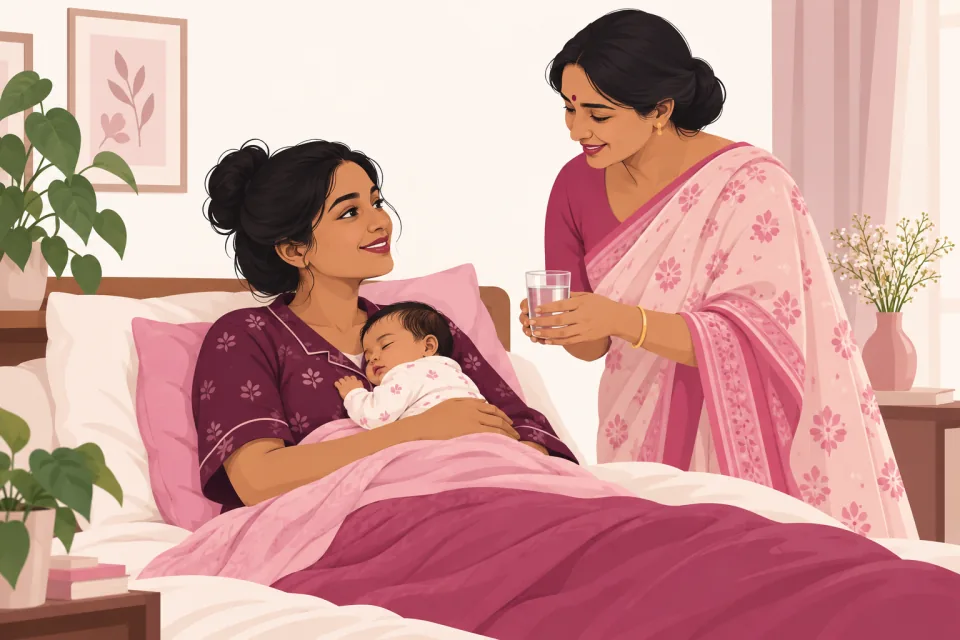
About postpartum
Recovery, feeding, bleeding, and the first months after birth.
0 guides ·157 answers
Following a topic is private. It changes what you see in My Space and nothing else — no one is told which topics you follow.
Answers — page 4 of 7
- My family wants to do a daily hot oil massage and very hot water bath for me, and burn sambrani smoke in the room for the baby. Are these okay? Editorially reviewed A gentle oil massage can feel relaxing for many new mothers. If you had a caesarean or stitches, avoid oil or pressure on the wound until it has healed, and keep the stitch area clean and dry. Warm, not very hot, water is best for baths, as very hot water can burn the skin and… Reviewed 10 Nov 2026· English
- After my normal delivery my husband says I feel loose during sex. I feel ashamed. Is this true and can anything help? Editorially reviewed After a vaginal birth, the vaginal and pelvic floor muscles are stretched and can feel different for a while. Most women find that tone improves over months, especially with regular pelvic floor exercises. It is a common concern and nothing to feel ashamed about. Pelvic floor… Reviewed 10 Nov 2026· English
- Chheenk ya khaansi aate hi thoda peshab nikal jaata hai, delivery ko ek saal ho gaya. Kya operation hi ek rasta hai? Editorially reviewed No, surgery is usually not the first step. Leaking urine on coughing or sneezing is called stress incontinence, and it is common after childbirth. Pelvic floor muscle training, done correctly and regularly for at least three months, helps many women reduce or stop leaking. A… Reviewed 10 Nov 2026· English
- Instead of losing weight after delivery I have gained more. Everyone says eat more for breastfeeding and I am always hungry. What should I do? Editorially reviewed It is common to gain weight after birth. Breastfeeding increases hunger, but the extra energy needed is modest, and family encouragement to eat rich foods, ghee sweets and large portions can add up. Lack of sleep and less movement also make weight gain more likely. Focus on… Reviewed 10 Nov 2026· English
- I am a single mother with no family nearby. How do I manage the first weeks after birth on my own? Editorially reviewed Managing alone is hard, and planning ahead helps. Keep meals simple, accept any help offered, and keep essentials such as nappies, water and snacks within reach where you feed. Rest whenever the baby sleeps, and let housework wait. Your ASHA, ANM or anganwadi worker can visit… Reviewed 10 Nov 2026· English
- My husband seems withdrawn, irritable and not sleeping since our baby came. Can fathers also get depressed after a birth? Editorially reviewed Yes. Fathers and partners can also experience depression and anxiety after a baby arrives. Sleep loss, money worries, changes in the relationship and feeling unsure about the new role can all contribute. Signs include withdrawal, irritability, low mood, poor sleep, drinking… Reviewed 10 Nov 2026· English
- My baby is eight months old and I have no interest in sex at all. My husband feels rejected and I feel guilty. Is something wrong with me? Editorially reviewed Low interest in sex after having a baby is very common and can last months or longer. Tiredness, broken sleep, hormone changes during breastfeeding, body changes, pain or dryness, stress, and the demands of caring for a baby all play a part. Nothing is necessarily wrong with… Reviewed 10 Nov 2026· English
- baby blues still crying 2 weeks after delivery normal or depression Editorially reviewed Baby blues usually begin in the first few days after birth and ease by around two weeks. If you are still crying often, feeling low, anxious or unable to enjoy anything after two weeks, it is worth speaking to a clinician, because this can be the beginning of postnatal… Reviewed 10 Nov 2026· English
- Discharge paper la third degree tear nu ezhudhirukanga. Adhu enna, future la motion control problem varuma? Editorially reviewed A third degree tear is a tear during birth that extends from the vaginal opening into the muscle ring around the back passage, called the anal sphincter. It is repaired in the operation theatre, and most women heal well after a careful repair. Some women notice difficulty… Reviewed 10 Nov 2026· English
- My baby is one year old but my hair is still thin. Doctor tested and said ferritin is low and thyroid is normal. Is low ferritin the reason? Editorially reviewed Postpartum shedding usually settles by about a year. When thinning continues beyond that, low iron stores are a common reason, and ferritin is the blood test that measures them. Low ferritin can slow regrowth and add to shedding, even when haemoglobin is in the normal range… Reviewed 10 Nov 2026· English
- Going back to office after maternity leave. What does the law in India give me for breastfeeding, like creche or feeding breaks? Editorially reviewed Under the labour codes (which replaced the Maternity Benefit Act from 21 November 2025), women working in covered establishments are generally entitled to paid maternity leave of up to 26 weeks for the first two children. The law also provides for nursing breaks during the… Reviewed 10 Nov 2026· English
- My period came once at five months after delivery and then nothing for two months. I am still breastfeeding. Could I be pregnant again? Editorially reviewed Irregular periods are common while breastfeeding, especially as the baby starts solid foods and feeds change. A gap of two months after the first period can be normal. However, once periods have started, ovulation is happening, and pregnancy is possible. A home urine pregnancy… Reviewed 10 Nov 2026· English
- Delivery apram idupu vali romba, kuninju thuni thovaikka, tharai thudaika mudiyala. Veetla velai panna vendam nu solla mudiyala. Enna pannalaam? Editorially reviewed Lower back pain after delivery is common. Pregnancy loosens ligaments and weakens tummy muscles, and bending repeatedly to wash clothes, clean floors or lift the baby adds strain. Where possible, avoid long bending: sit on a low stool to wash clothes, use a long-handled mop, and… Reviewed 10 Nov 2026· English
- Ghar ke bade kehte hain delivery ke baad din mein sona nahi chahiye, sujan aa jayegi. Raat bhar jaagti hun, din mein bhi nahi so sakti. Kya sach mein nuksaan hai? Editorially reviewed There is no medical reason to avoid daytime sleep after giving birth. Napping when the baby sleeps is one of the most practical ways to recover from broken nights. It does not cause swelling or harm your body. Sleep loss affects mood, healing, concentration and milk supply, so… Reviewed 10 Nov 2026· English
- My nipples have a burning, shooting pain after feeds and baby has white patches inside the mouth. Could this be thrush? Editorially reviewed Burning or shooting nipple pain that continues after feeds, especially with shiny or flaky nipples and white patches in the baby's mouth that do not wipe off, can be due to thrush, a yeast infection. It often follows antibiotics. Other causes, such as a poor latch or nipple… Reviewed 10 Nov 2026· English
- My sister had fits after delivery at the district hospital and was treated for eclampsia. Now she is home. What follow-up does she need? Editorially reviewed Eclampsia means fits linked to high blood pressure in pregnancy or after birth. After treatment, she needs close follow-up because blood pressure can stay high for some weeks, and there is a small chance of further problems. She should have regular BP checks, ask her doctors… Reviewed 10 Nov 2026· English
- I had gestational diabetes. My mother is making gond laddoo and panjiri daily for confinement. Doctor said get a sugar test after six weeks. Should I avoid these foods? Editorially reviewed Gestational diabetes usually settles after birth, but it raises the chance of type 2 diabetes later. That is why a sugar test is advised some weeks after delivery and then regularly. Traditional confinement foods like gond laddoo and panjiri are rich in sugar, ghee and calories… Reviewed 10 Nov 2026· English
- Amma veetla 40 naal kaadhu la panju vachu, fan podama irukka sollranga. Summer la romba vervaikkudhu. Idhu thevaiya? Editorially reviewed There is no medical need to keep cotton in the ears or avoid a fan after delivery. Keeping cool and comfortable is good for both mother and baby, especially in hot weather. Overheating can make you feel weak and dizzy and can cause rashes, dehydration and poor sleep. A fan on a… Reviewed 10 Nov 2026· English
- Delivery ke baad pet kam karne ke liye gym kab join kar sakti hun? Normal delivery hui thi teen mahine pehle. Editorially reviewed After an uncomplicated vaginal delivery, gentle activity like walking and pelvic floor exercises can start soon after birth. Many women can begin more structured exercise from around six weeks after their postnatal check, building up gradually. At three months, joining a gym can… Reviewed 10 Nov 2026· English
- bp 150/100 on home machine 5 days after delivery headache Editorially reviewed A blood pressure of 150/100 with a headache in the days after delivery needs assessment at a hospital now, not later in the day. High blood pressure can appear or worsen after birth, even in women who had normal BP in pregnancy, and this can be a sign of postpartum… Reviewed 10 Nov 2026· English
- My first two babies were C-sections and I am pregnant again. Doctors keep saying third caesarean has more risk. What exactly are the risks? Editorially reviewed Each caesarean leaves a scar on the womb. With more caesareans, the chance of certain problems increases, including the placenta growing into or over the scar, called placenta accreta or previa, heavier bleeding, injury to the bladder or bowel because of adhesions, and longer… Reviewed 10 Nov 2026· English
- passed big clot like lemon size 2 weeks after delivery Editorially reviewed Small clots can be passed in the first days after birth, especially after lying down. A clot as large as a lemon two weeks after birth is not usual and should be checked, because it can mean the womb is not contracting fully or a piece of placenta is left inside. If the bleeding… Reviewed 10 Nov 2026· English
- Ghar mein bolte hain ajwain ka paani, methi ladoo aur zyada ghee se doodh badhta hai. Kya ye sach mein kaam karta hai? Editorially reviewed Traditional foods like methi, ajwain and ghee are part of many confinement diets. They can be part of a healthy diet, but there is limited scientific evidence that any food reliably increases milk. The most effective way to increase supply is frequent and effective milk removal… Reviewed 10 Nov 2026· English
- Six months after my caesarean the scar has become raised, dark and itchy. Is this a keloid and can it be treated? Editorially reviewed A scar that becomes thick, raised, darker and itchy may be a hypertrophic scar or a keloid. Hypertrophic scars stay within the wound line and often flatten over a year or two. Keloids grow beyond the original wound and are more common in people with darker skin and a family… Reviewed 10 Nov 2026· English
Guides and articles
No guides here yet
This topic was read and no guide is filed under it. A longer guide is published once it has been reviewed, and its page says who reviewed it.
Related topics
Would a session help?
Ask for a doctor to host a session on this topic. Only the number of requests is ever shown — never who asked.
Life-stage collections
Curated sets of answers for early adulthood, pregnancy, postpartum, midlife and later life.